Tails From Provence
What happens when a horsemad Ould Wagon moves from Cork to Provence with 2 horses, 2 dogs and a Long Suffering Husband? Why, she gets a third dog, discovers Natural Horsemanship à la Française, starts writing short stories and then discovers a long-buried talent for art, of course…

How the Connemara Pony has Changed
This documentary, Connemara and its Ponies, appeared on a friend’s Facebook page last week. I had a look at it over a nice cuppa Barry’s on Saturday morning and found it to be an absolute gem! Made by RTE, the national Irish broadcaster, in 1971, it’s a fascinating look at Connemara, its people and its ponies more than forty years ago.
To my eyes, the Connemara breed has changed enormously over the last forty years. They were much chunkier and coarser looking back in ’71. Also, there’s the size – the narrator says that the ponies should be 13 to 14 hands (133 – 143cm). Nowadays, you’ll find a 15 hand (153cm) purebred Connemara without too much difficulty. The ponies were bred to bring the height up to international pony jumping height (officially 147cm nowadays) in order to increase their value as potential sports ponies, but this has meant that there’s plenty of ponies finishing over height. This is nice for small adults like me, but what does it mean for the breed overall?
Then there’s the length of back. The narrator says “compact, with a short back and strong loins” yet I remember reading in the early seventies that a good Connemara should have a long back, so that there was room for two creels of turf plus a rider behind them. Strong loins were also important – to support the weight of that rider, presumably. Is it the fact that this video was shot in wide format that makes all of these ponies look significantly long-backed, forty years ago? Or did they really look like this?
And the hooves – somewhere along the way, the need for a strong, hard hoof became less important. A weakness has been introduced into the breed and, worse still, overlooked for several generations as it was passed on. Look up the Connemara Pony Hoof Wall Separation Research blog for more information on this, and for the latest news on research.
Anyway, the video is just under half an hour long. Click through to the RTE player on the picture below, make yourself a tea or a coffee, grab a few biccies, sit back and enjoy. As well as the ponies, there’s beautiful scenery and some – um – interesting riding styles…

Click to visit the RTE player
It’s available until July 2016, so if you’re visiting this blog after that date, sorry but you missed the boat!
The Distillery
We’re just coming to the end of lavender harvest here. It’s a hectic time for the producers. Things start quietly enough in the middle of July with the harvest of the Clary Sage, then the lavender harvest gets going and it just goes crazy. They’re literally working flat out from 5am to 1am for two or three weeks. It’s nowhere near as labour intensive as it used to be, but it’s still damn hard work.
Last year, I saw first-hand how the lavender is harvested but I’ve always been curious about how it’s transformed from being stuff growing in a field to being a clear oil in a bottle. I knew our friends at Gaec de Pimayon took their crops to a distillery on the far side of Vachères but what I didn’t realise until recently was that the distillery is run as a co-operative. This means that they all have to man it at some stage – the group doesn’t employ someone to run it. When we heard this, we asked if we could visit the distillery while one of our friends is there and find out what the whole process involves.
The LSH also wanted to take photos of the cutting process. He knew what was involved since seeing my photos last year but he was still shocked at how much like cutting silage it is.
The tractor drives along the rows :
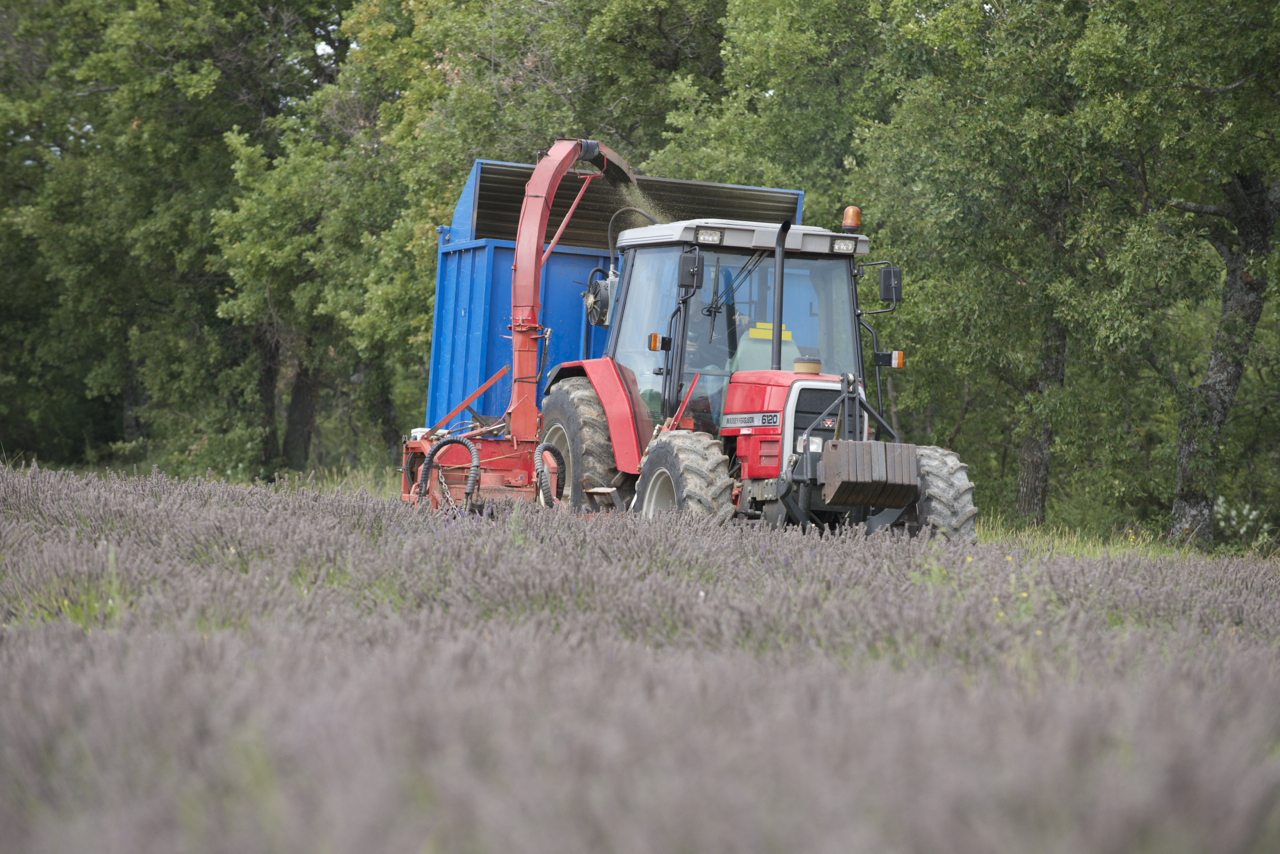 It has a special mower which bunches up the lavender…
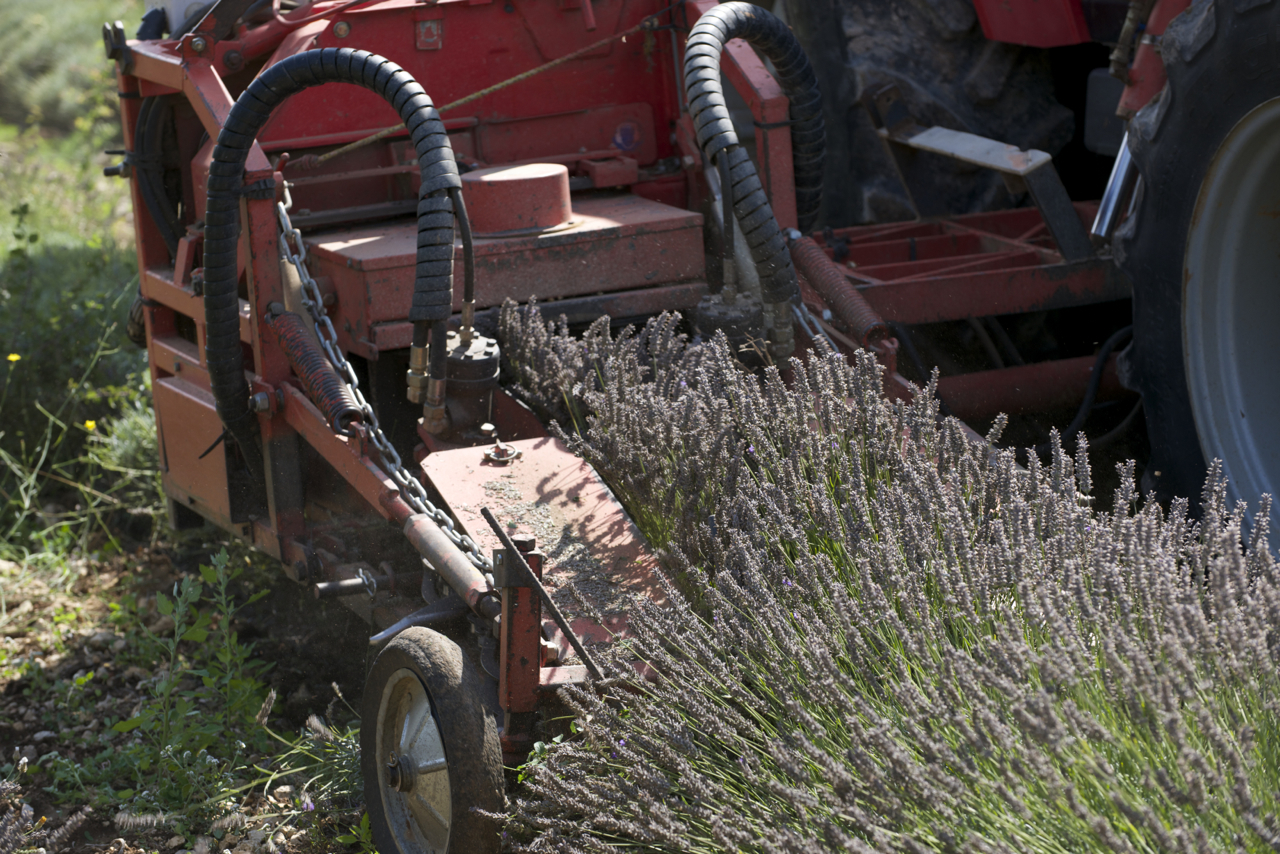 …and feeds it into the cutting part.
 Then it’s literally blown into a large hopper, mounted on the back of the tractor.
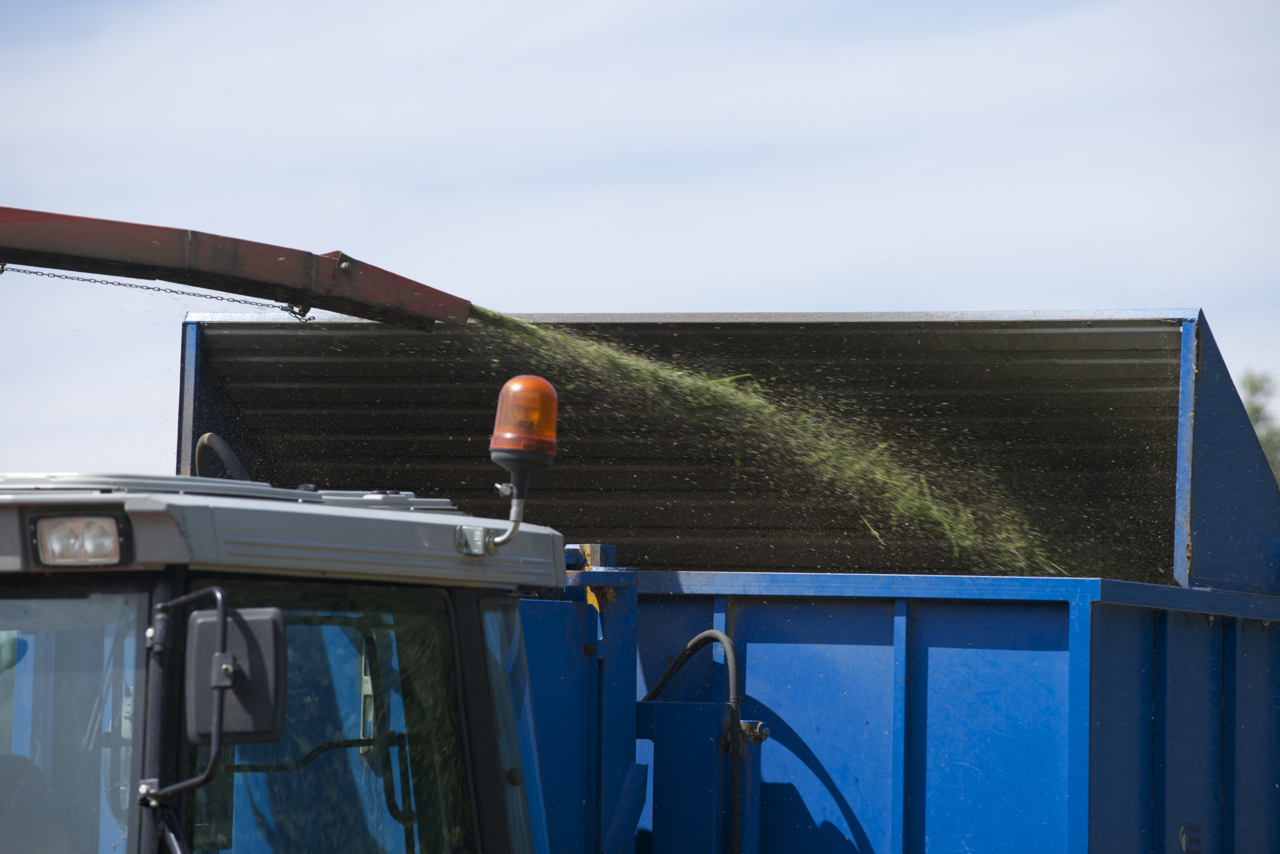 Whenever the hopper is full, it’s emptied into a giant green trailer. Yes, all the trailers around here are green.
 This is the only point in the process where there’s a bit of manual labour involved, levelling off the top of the trailer when it’s nearly full.
 There was a second mower in operation the day the LSH was there, which cuts the lavender differently. It doesn’t chop it up so much, it leaves it on the stem, but it gets chucked into the trailer just the same.
 This looks more like what we’d expect of a lavender harvest, but note how it’s harvested after the pretty flowering stage. Forget your images of Provençals cutting bunches of flowering lavender with a sickle – to make oil, it’s always cut once the seeds have formed. This is because the seeds contain much more oil than the flower heads and the stems have usually dried out a bit at this stage, too, reducing overall moisture content.
Once the trailer is full, it sets off to the distillery. This step can easily take an hour or more, even though they’re usually cutting within a 10km (6 mile) radius. The distillery is discreetly tucked away in a little valley, but roads around here are narrow and there’s a long, twisting descent to get there. These tractors just can’t go fast, especially with a full load.
This is what a lavender distillery looks like :

No, it’s not what I expected either, but note how those big green crates on stilts match the green trailers. That’s important.
There’s a downstairs section, built into the slope of the hill. Down there, we found a gigantic gas-fired water heating system. So big that I could only photograph bits of it.


Water softening system for the boiler :

Very important in this area, because the water is very hard. There were also a couple of tanks and barrels in a corner…

…and an empty bottle of human fuel!

The next bit is where it really starts to get interesting, but first we’re going to take a look at one of those giant green trailers. Ordinary enough, with metal sides and a metal floor – but why does it have those ridges on the floor?

Let’s take a closer look :

It turns out those ridges are pipe, with little holes in them every so often. Keep that in mind.
When the tractor arrives at the distillery, first of all it joins the queue. Oh look! The trailers match those green crates on stilts! Interesting…
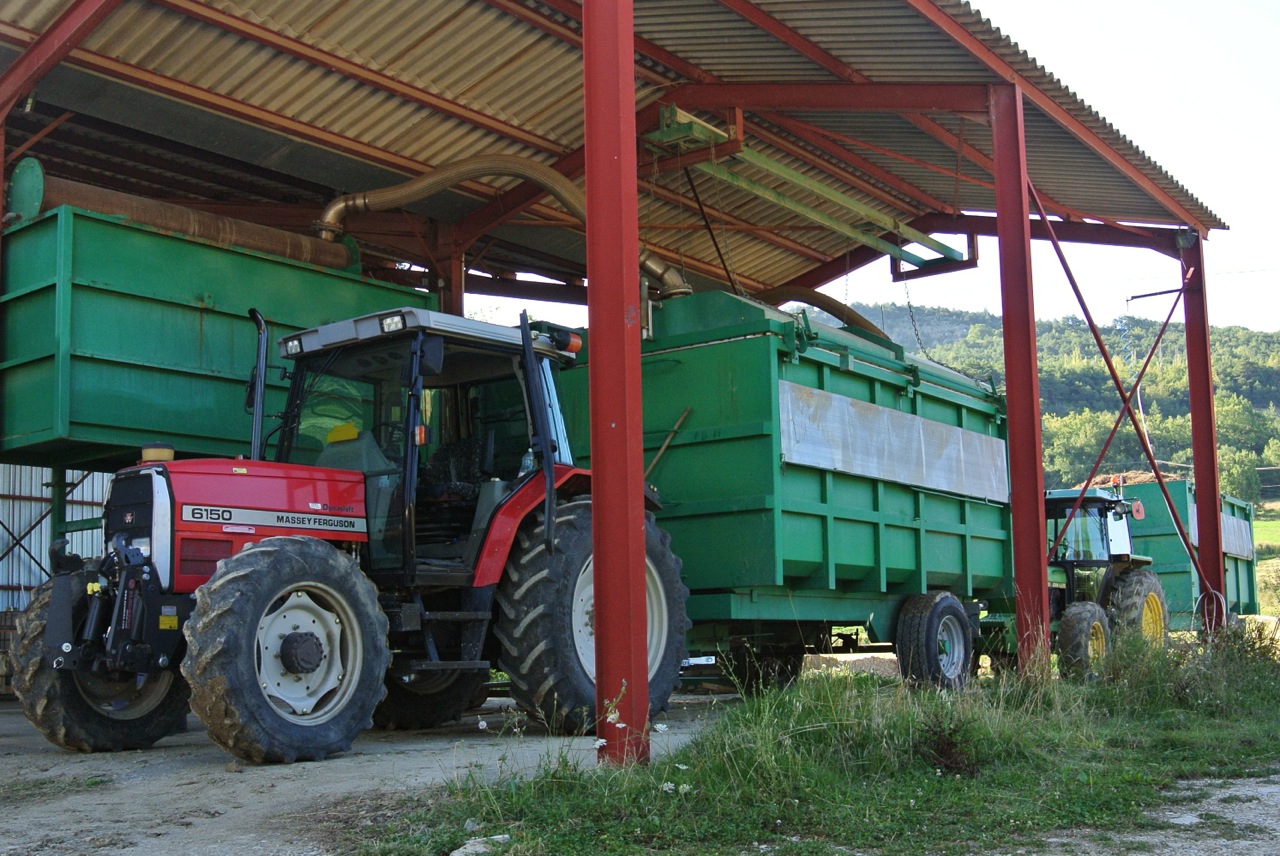 We’re at the end of the season now, so things have quietened down but, at peak cutting-time, there could be four or five tractors in the queue. It takes an hour to process each trailer, so that’s a four or five hour wait. The smart farmer will have left his car at the distillery earlier and, at this stage, he’d hop into it and go back to the farm to do some more work. But the co-operative have provided the distillery with all the comforts of home for anyone who’s waiting.

No, seriously. There’s armchairs, a table and chairs, fridges and a couch where many a tired farmer will stretch out for a snooze.
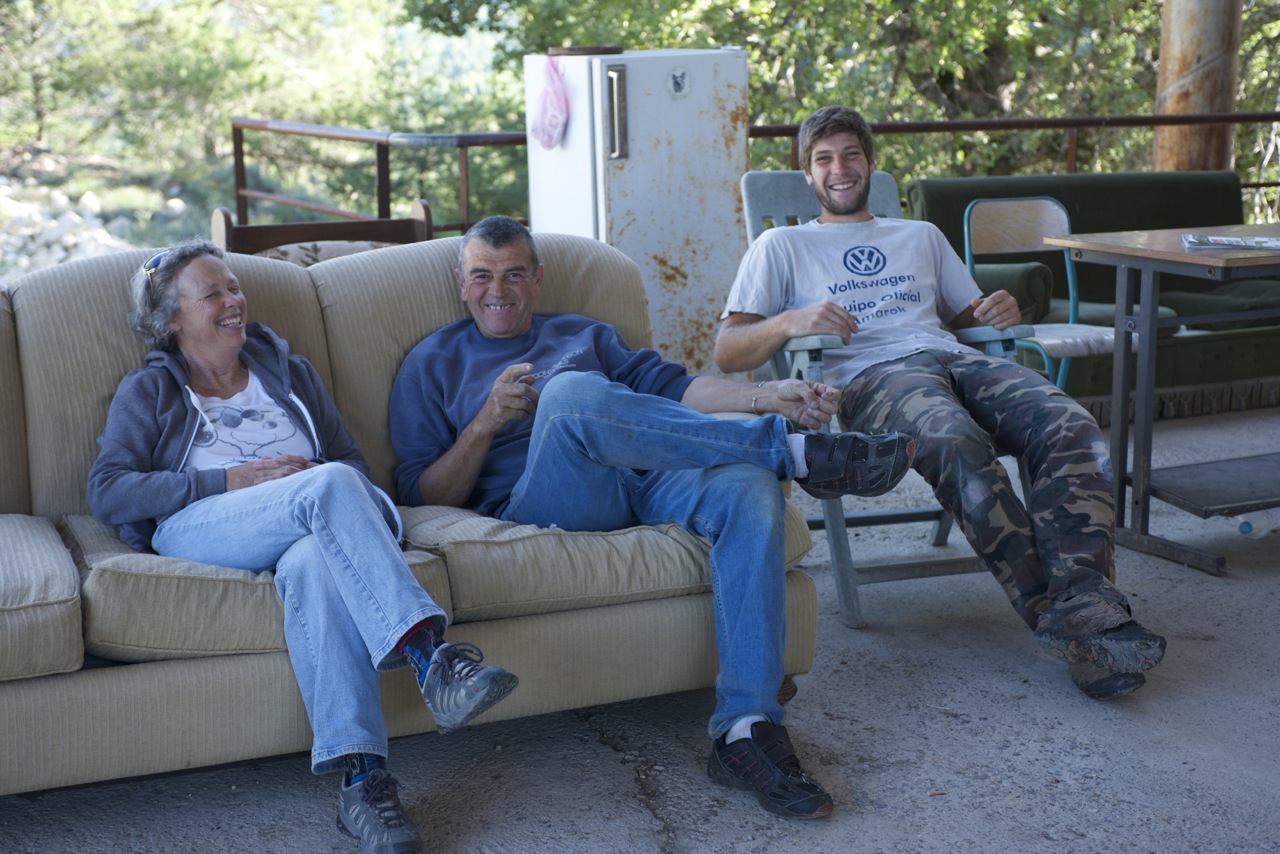
When it’s not occupied by a visiting Irishwoman, of course. That couch is a helluva lot more comfortable than the couches in our house!
Anyway, each tractor takes its turn. It pulls forward into the processing bay and a giant green lid descends to seal the trailer.
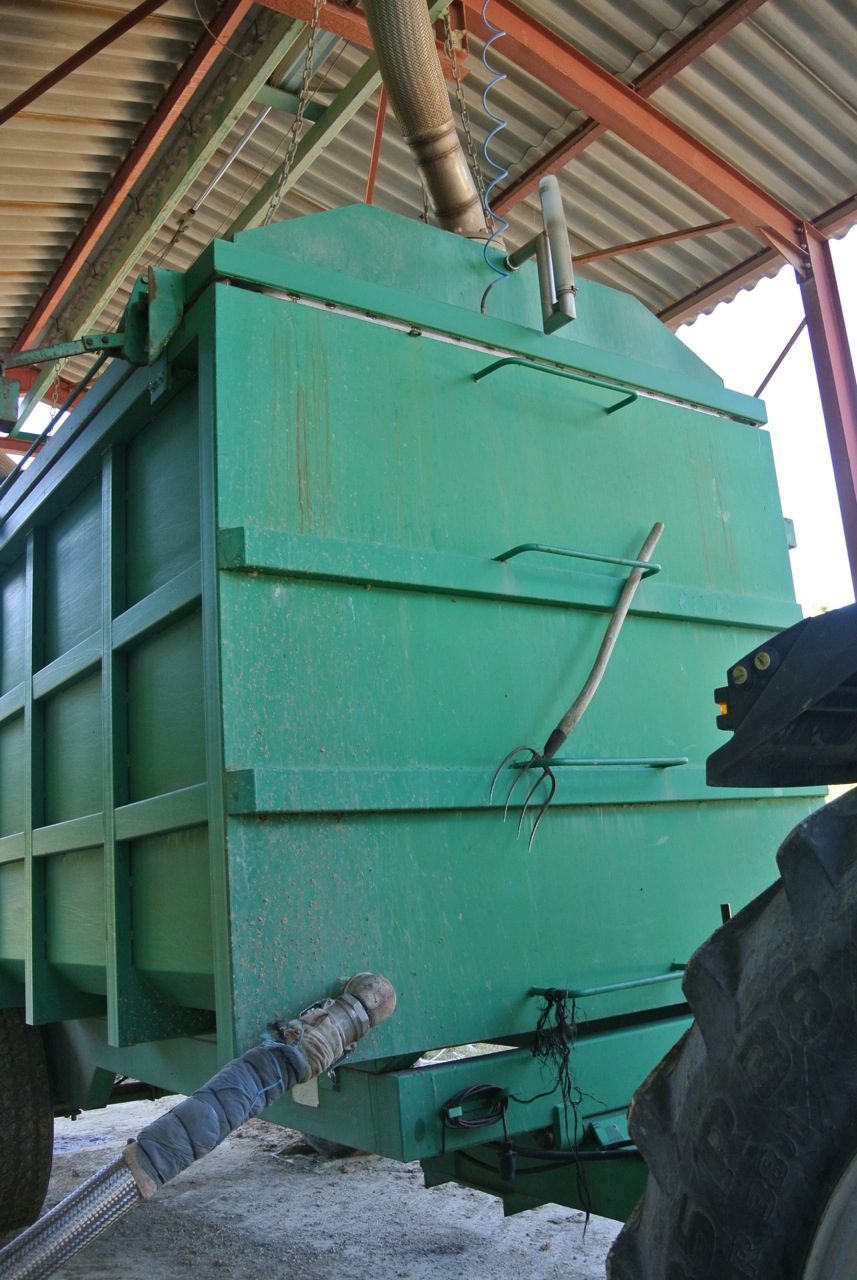
A big pipe is connected at the front of the trailer. You can see it in the above photo at the bottom left. Now are you starting to guess what those pipes with the holes are for?
The lid is locked down with a really heavy duty clamping system and a valve is opened.

Then that big pipe connected at the front starts to inject steam, generated by the big heating system downstairs, into the trailer’s system of pipes. The steam comes out through those little holes in the pipes and starts to heat the lavender but, because the trailer is now sealed, the heated air has nowhere to go and pressure starts to build up.
Yes. It turns out that each one of those giant green trailers is basically a massive pressure cooker! Each trailer is an integral part of the processing system – hence the matching colour!
Once the pressure has come up, the final seal is topped, just like putting a weight on top of a pressure cooker. Now the lavender starts cooking, releasing some moisture but also releasing its precious oil. The moisture and oil are turned into steam. The green crates on stilts – the ones that match the giant green trailers – contain a condenser system of coils in a bath of cold water. The oil-bearing steam is vented into the condensers through the big pipes on top of the ‘lid.’ The steam turns back into water, but now the liquid contains oil, too.
Remember those barrels we found downstairs? This is what they look like when viewed from above :

The condensed water/oil mixture goes into the big barrel at the bottom of the picture. The oil, being lighter than water, rises to the top of the barrel. As the barrel fills up, the top layer of oil starts to gush out through the hole in the middle of the lid. From there, there’s a pipe feeding into the cream coloured barrel to the left of it. This one is labelled ‘Essence de Lavandin. Gaec de Pimayon.’
Meanwhile, there’s a pipe at the bottom of the separation barrel which takes out the water and feeds it, via a funnel, into the middle of the three barrels in the picture. There’s a similar pipe feeding out from this barrel, which takes away any final oils and impurities which rise to the top. These impurities are fed into the third barrel, which ends up containing contaminated water which has to be disposed of safely. The water in the second barrel is clean, although scented with lavender. It can be used for ironing clothes – it’s distilled and it’s got a lovely smell!
Near the end of the process, the distiller (Georges in this case) has to keep a close eye on what’s rising up through the hole in the middle of the oil/water separator. Once the layer of oil at the top starts to thin, there’s a danger of water bubbling up and contaminating the contents of the Gaec de Pimayon oil barrel.
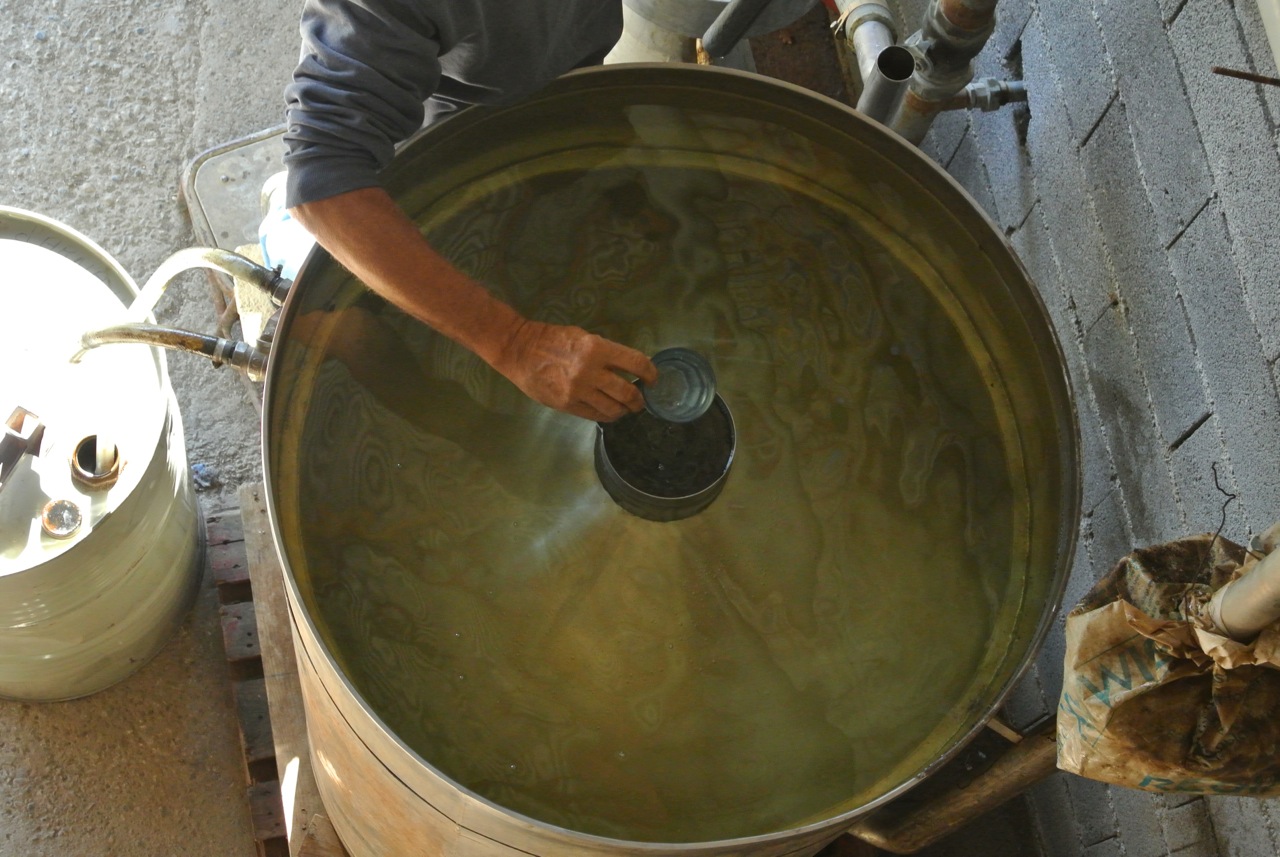
The smell of lavender from our viewpoint for these photos was over-powering, to say the least. But Georges told us to be thankful he wasn’t doing clary sage – apparently that smells like cat pee. Yeuch! I used clary sage when trying to ease migraines at one stage and I would describe it as strange – not nice, but not like cat pee either. I guess when you have it in this sort of intensity it would be pretty disgusting, though.
When the lavender is ‘cooked’ the pressure is slowly reduced, exactly like in a pressure cooker, by turning off the heat and venting the vapour through a small hole when pressure has dropped sufficiently. Then the lid is opened, in a cloud of steam.
 Now it’s changeover time. One tractor drives away with an even heavier load of cooked, wet lavender, and the next tractor in line moves forward to hook up.
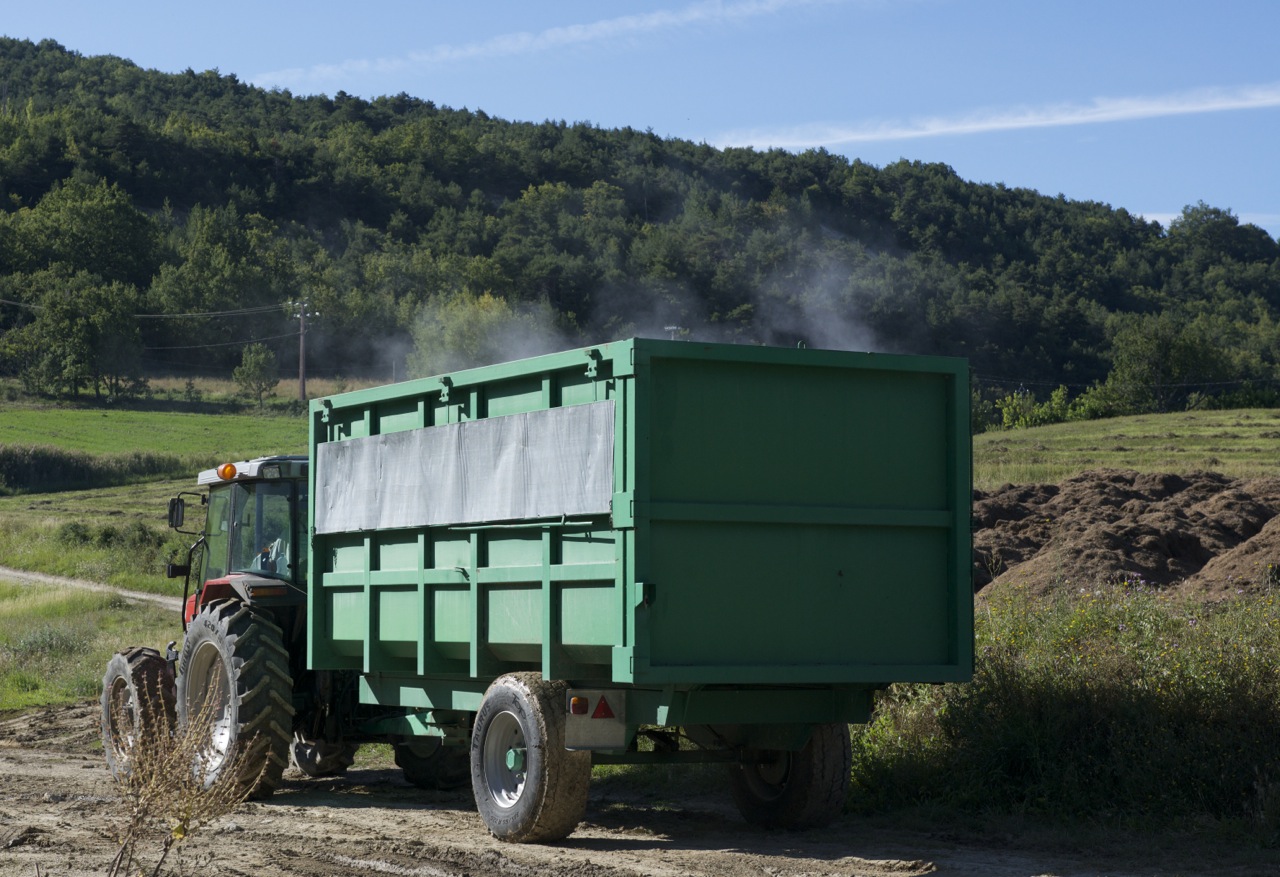 The cooked lavender will be dumped on fallow ground or stubble to cool down, like you can see behind the tractor in the above picture. Later on, it will be added to the manure pile and left to rot before it’s spread on the land again as a fertiliser.
We found the whole process fascinating, but I’m sure if you’re there in the distillery for ten hours pushing buttons or opening and closing valves, it becomes very boring. Georges told us that the next crop to be distilled here will be fennel. Fennel? I was curious. I knew that lavendin (the cheaper version of lavender which is grown locally) is used for domestic purposes – to perfume washing up liquid, soaps, fabric softener, air fresheners etc. What are clary sage and fennel used for, I asked.
Clary sage is used for two things and the flowers and stems are processed separately. First of all, the oils are extracted from the flower heads. The market for this oil is very up-and-down. Some years, it’s not even worth distilling this part of the plant. This oil is used as a fixative by the perfume industry. The stem of the plant produces a much more valuable amber coloured solid, called sclareol. It has a more attractive perfume than the oil from the flowers (less cat pee, apparently) and is used by the perfume industry, but it’s also used as a food flavouring and it has medicinal uses too. According to Wikipedia, it can be used to kill human leukemic cells and colon cancer cells! No wonder it’s valuable.
 Clary sage has a life cycle of five years max. It’s not harvested the first year but it should produce oil for the next two or even three years. It’s a tough plant and it thrives on very poor ground in an alpine climate (hot summers, cold winters) so it’s the perfect crop for the stony, mountainous parts of this region. Lavender, on the other hand, is susceptible to a bacteria carried by a bug (leaf hoppers) which causes the plants to dry out and die. Until they find a method of controlling this, lavender farmers expect to be ploughing up a lavender field every eight years or so. Then it has to have something else grown in it (usually a cereal crop) for two to three years minimum to get rid of the infestation. Lavender is a much more valuable crop than any cereal, so the growers are keen to get their fields back into production as quickly as possible, naturally!
Fennel oil? What does that get used for? Well, it’s an ingredient for pastis, the anise flavoured liquor which originated in Marseille. The locally grown fennel goes to Ricard, the original producer of pastis, and still the world’s biggest seller. There are strict controls on its cultivation. Inspectors visit the area to inspect the crops a couple of times a year. Then, when it’s being distilled, there is a Ricard representative present the whole time. As soon as a barrel is full of fennel oil, it’s sealed and stowed in the Ricard truck, which sits there waiting all day. Quality control starts well before the manufacturing process!
The modern distilling equipment was only installed fifteen years ago and it was interesting to see the old stills side by side with the new. These are the old cooking vats. The lavender had to be forked into these by hand from the trailers.

Then it would be tamped down, using the concrete filled tyre.
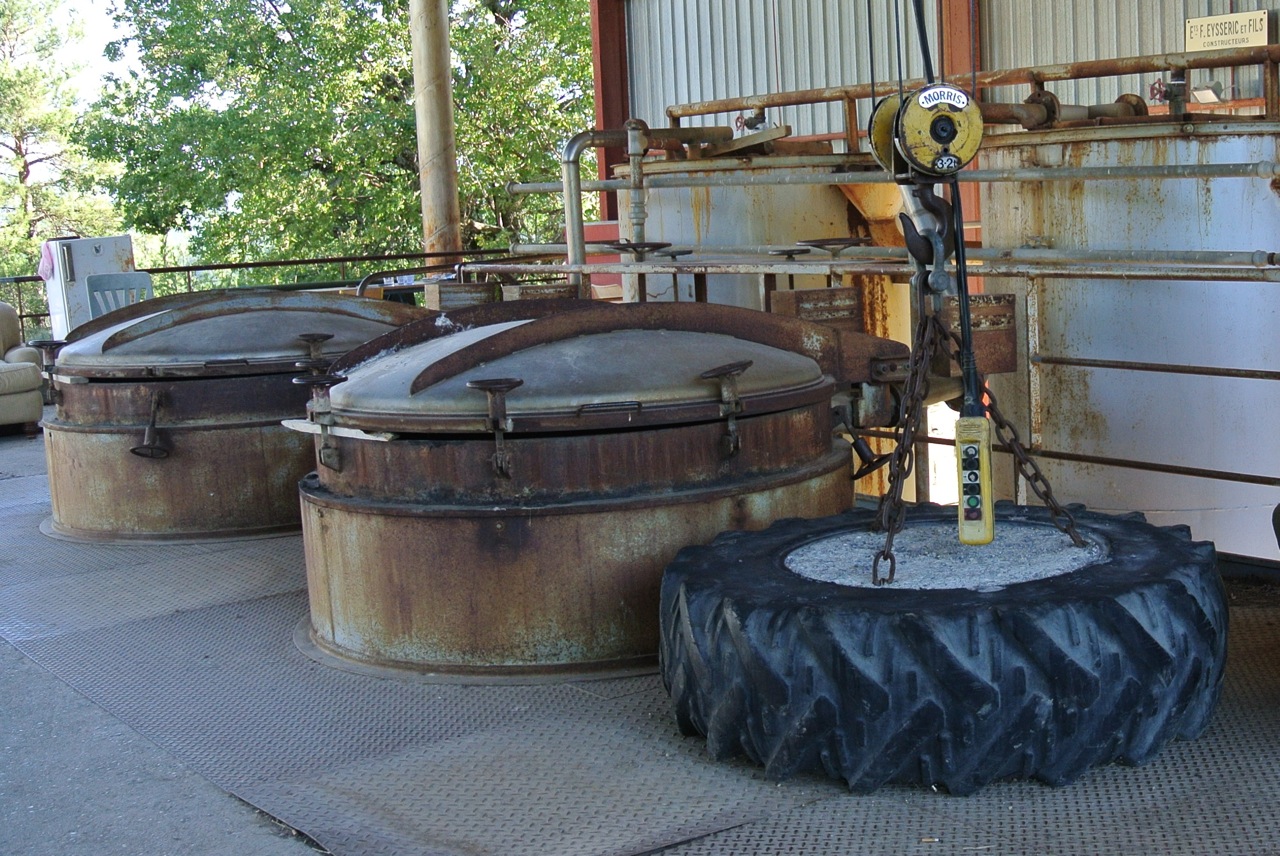 Oil and water from these vats were directed into the two huge metal containers in the background, which are the old separators.
 I’m sure this was state-of-the-art in its day, but it looks positively archaic now. The new equipment has made the whole process a lot more efficient and a lot less labour intensive – although the farmers are still putting in nineteen or twenty hour days at harvest time!
So now you know how this

gets turned into this.

I hope you found it as interesting as I did. Otherwise, that makes me some sort of agricultural nerd.
Just what we wanted
It’s just over four months since the LSH returned from Ireland with our new dog, Rosie, asleep in the back of the Fiat 500. It’s taken that long for her personality to blossom. Initially, she was very polite, friendly, a little needy and she slept a lot.

Sunbathing in the early days
She wasn’t really playful and had no interest in toys – she was quite confused the first time she saw Cookie hurtling after a ball. She was reluctant to play with Cookie, although Cookie tried hard to encourage her. The trouble was, Cookie has a short fuse. If she got too rough with Rosie, Rosie would growl and tell her to ease off. That’s like a red flag to a bull as far as Cookie is concerned and we had one or two incidents which escalated to a serious snarl-fest.
Things settled down and it seemed like Cookie stopped asking Rosie to play. All three dogs were contentedly living their own lives. They walked together, slept together and ate together but they had different interests.

Cookie’s life revolves around making sure our garden is safe from intruders, be they humans, dogs, cats, birds, snakes or lizards. This involves a lot of perimeter patrols. As in, she literally patrols the garden all day long, checking known hidey holes and suspicious smells; making sure our fence was secure and demonstrating its weak spots when she finds them by squeezing through and running down the road, barking at the neighbours dogs. (Sigh. It’s fixed now.) She also likes to make sure she knows where her toys are, and she takes them out for a play every so often.

“I found my ducky and my ball-y! Can we play now?”
Her day is, quite literally, non-stop. The Durcell Bunny wouldn’t have a hope of keeping up with her. If she was human, I have no doubt that she’d have been in Ritalin since the age of five and her parents would be in a home for the bewildered by now. But she’s a lot of fun…
Cinnamon’s life revolves around sleeping and obsessing over her favourite playthings. She’s so OCD that we have to take her toys away for a break every so often, otherwise she could work herself up to a full-scale heart attack while trying to disassemble something. Once a toy has been removed, she continues to obsess by sitting in front of the cupboard where we’ve hidden it and whining.
She recently discovered cones. This is how I wanted our fireplace to look for the summer months :
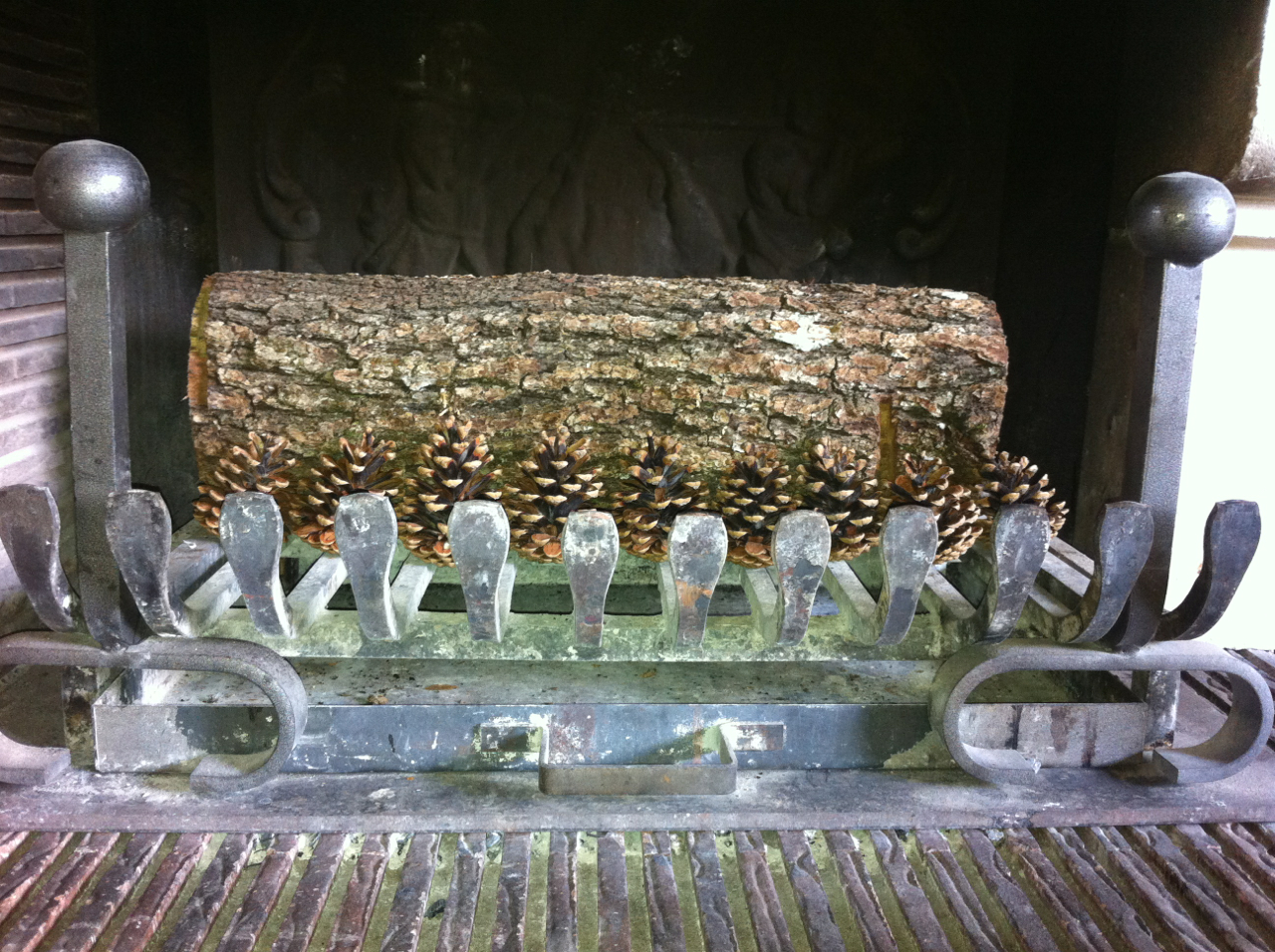
This is how it usually looks :
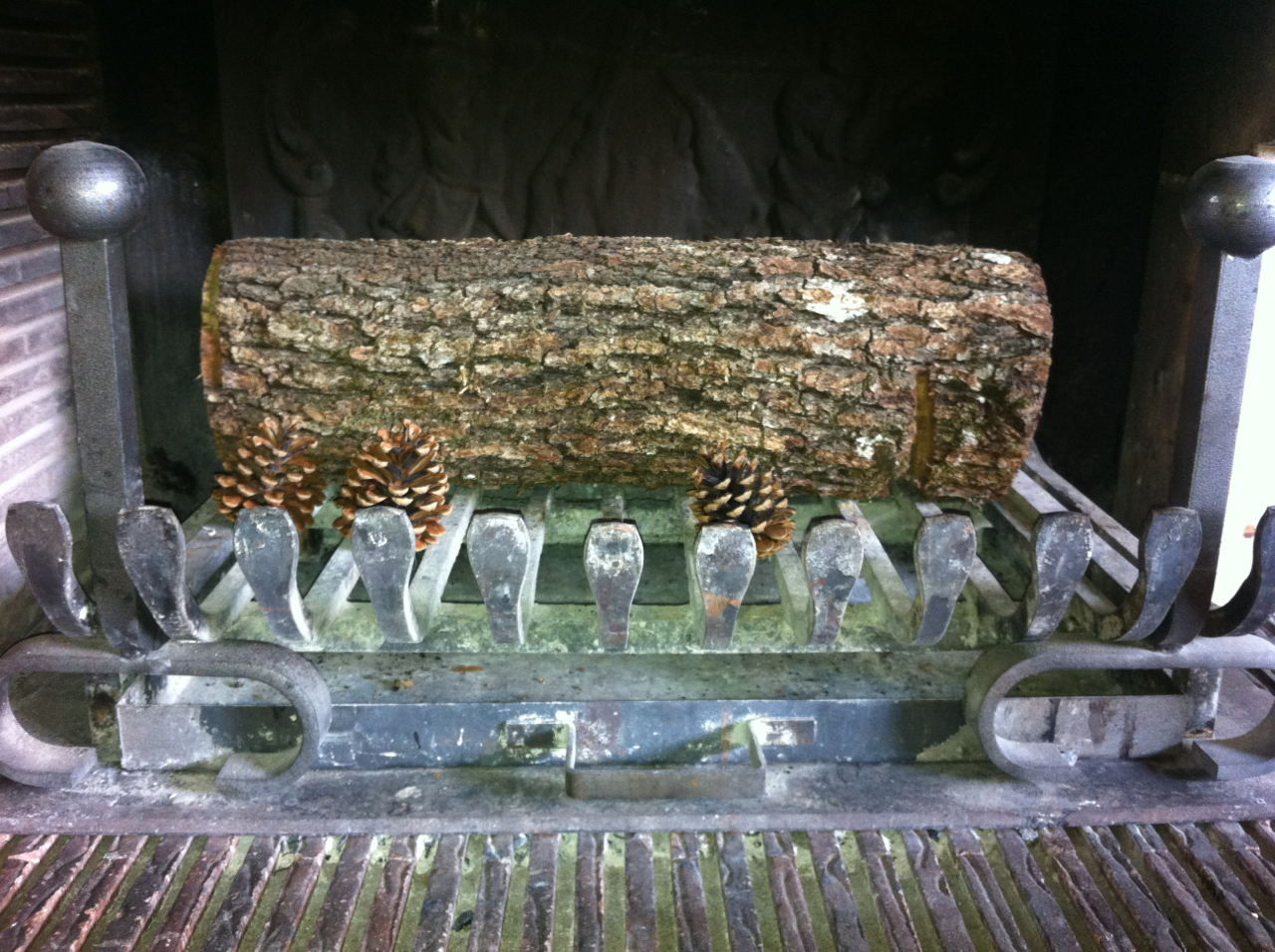
This is the culprit, complete with the Cones of Shame :
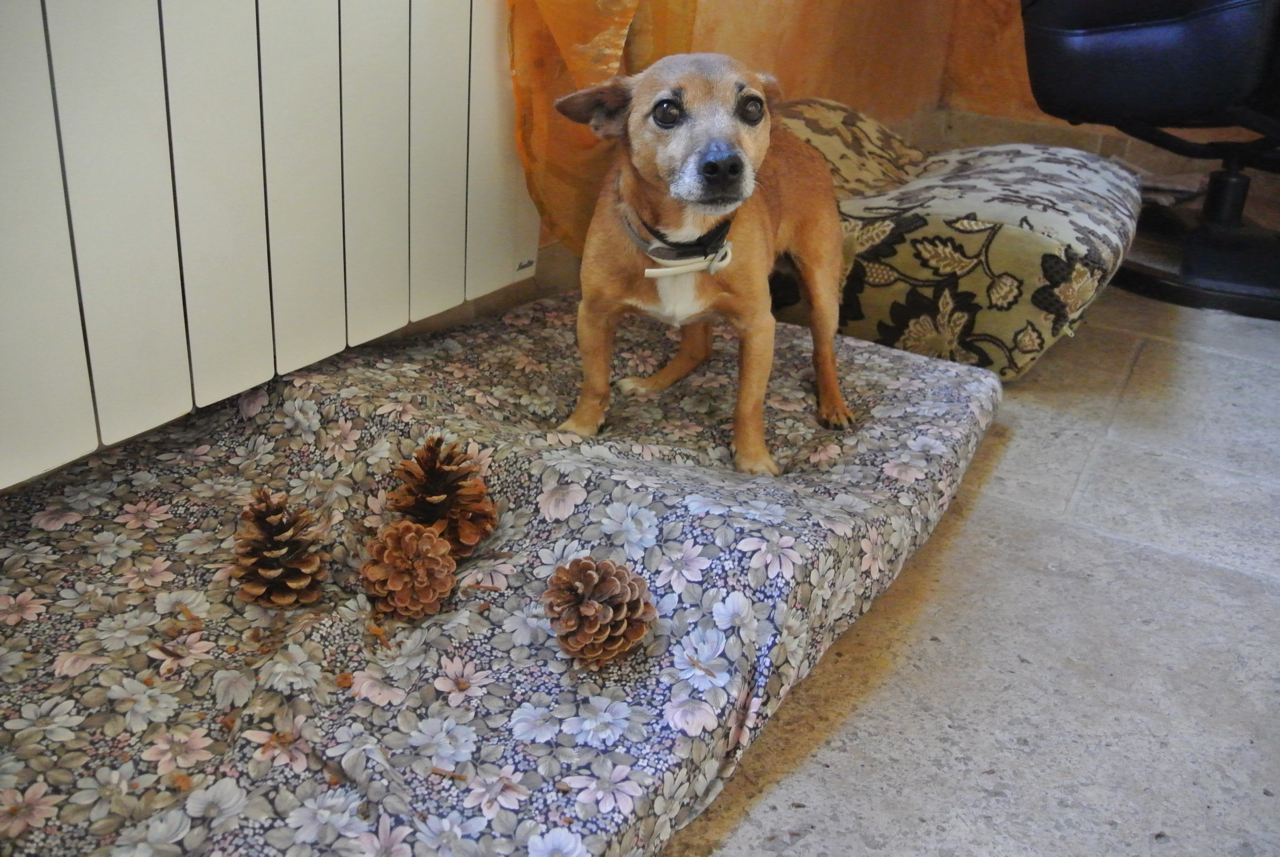
Oh yes, we have Speshul Dogz.
Rosie’s life? Let’s just say that Rosie’s life revolves around sleeping. Whenever she wakes up, well, she might just have a quick nap before sleeping again. SomeOne Who Shall Remain Nameless was even heard to remark “She’s a lovely dog, but it would have been a lot cheaper just to buy a rug!”
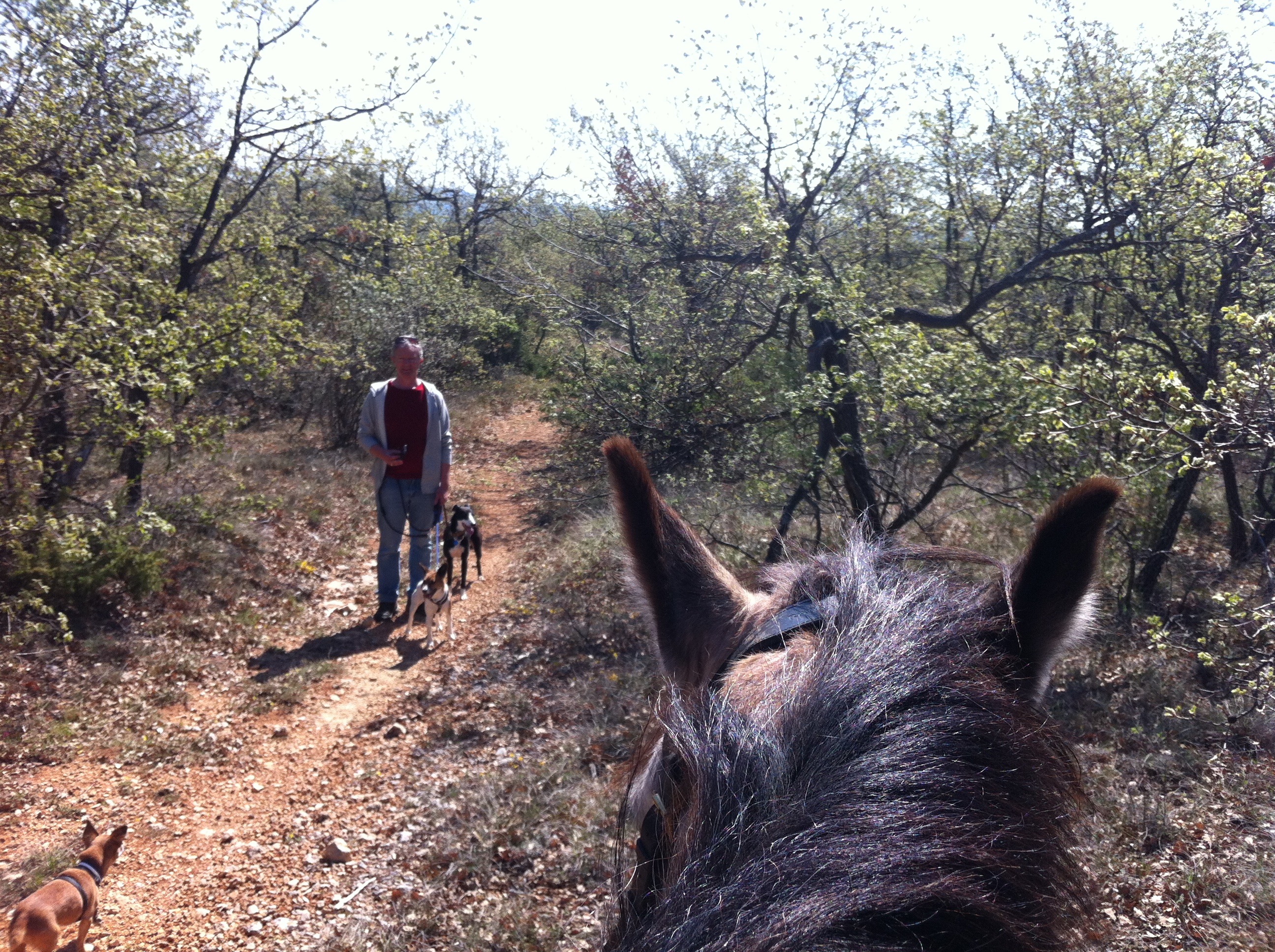
Sure, she enjoyed her walks, happily accepting Flurry as part of our pack :
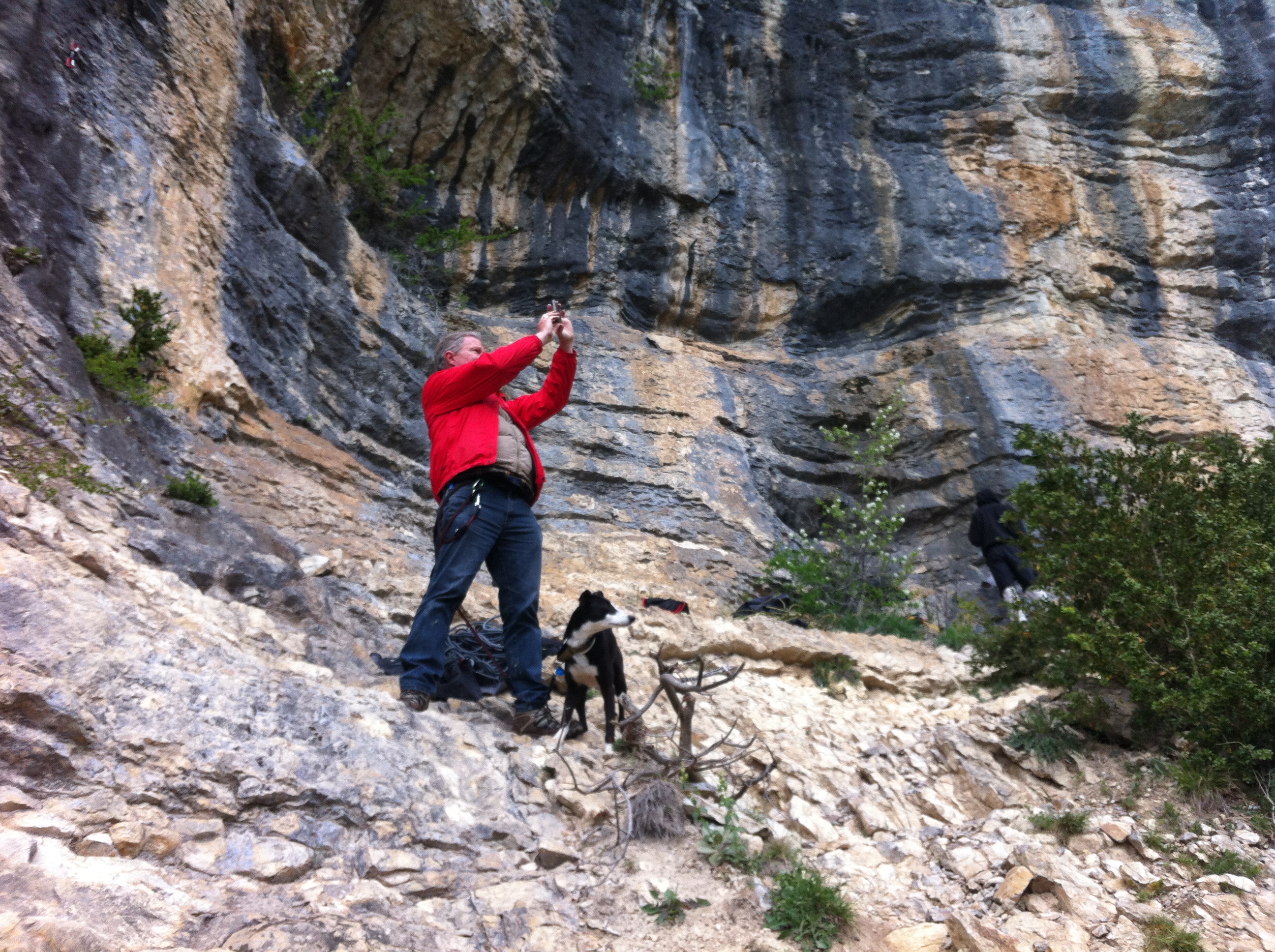
She learned how to be a good Photographer’s Dog (ie. stand quietly at the end of the leash without pulling)
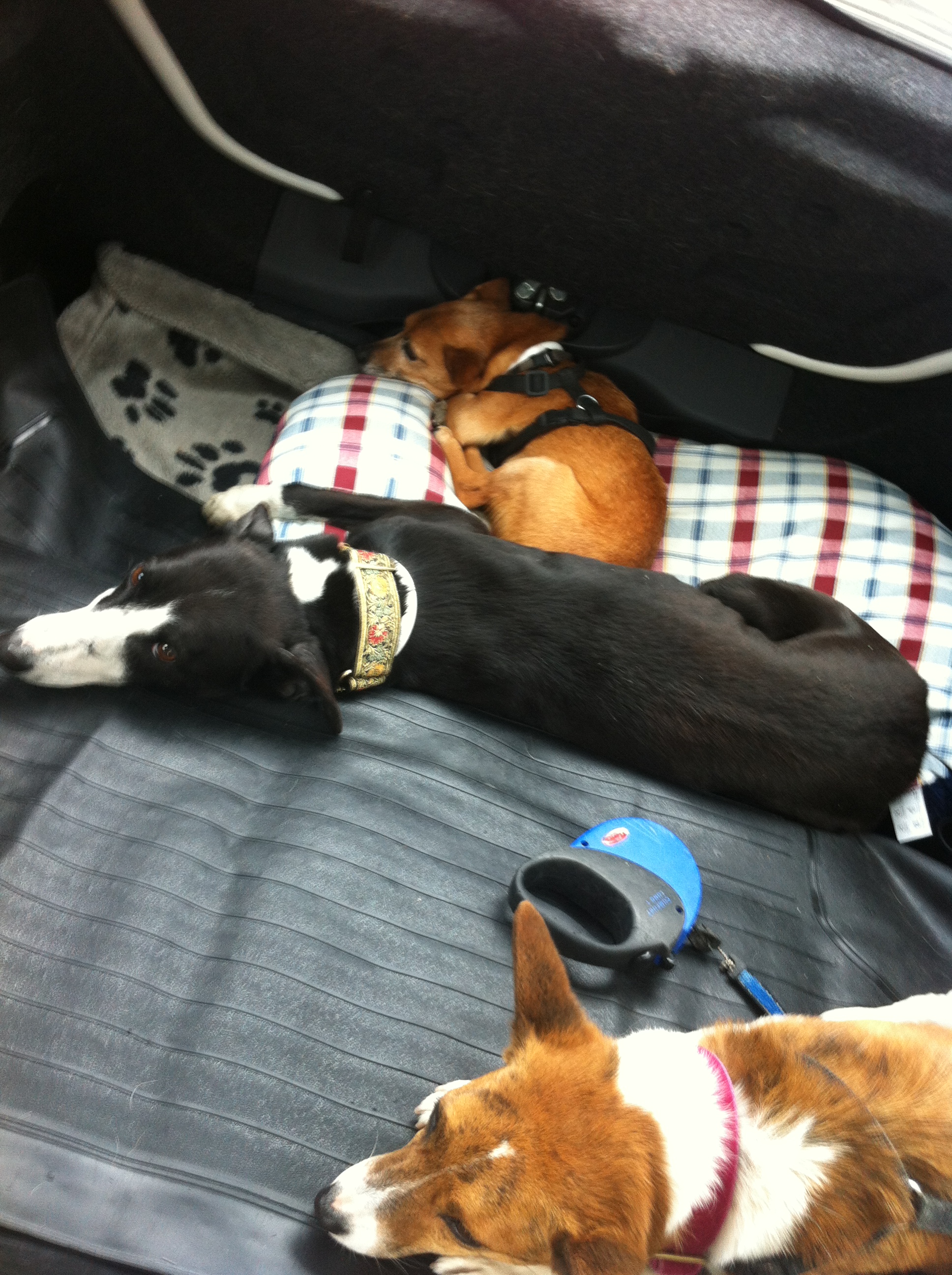
and she settled happily in the back of the Fiat 500 with her new sisters :
Despite all the stimulation, sleeping was still her primary focus.

But something changed recently. She’s now picking up toys (sometimes cones, sometimes a choice piece of cardboard or plastic from the recycling bin, sometimes an Approved Dog Toy) and playing. She’s even had a few scatty playful moments with us, resulting in her demonstrating the Sighthound Snap when she became really excited…

WAAH! My favourite t-shirt!
We think that the catalyst was the fact that we were away for two weekends and John the Dogsitter looked after the pack. Gari also came to visit while John was here, and he and Cookie spent hours and hours playing.
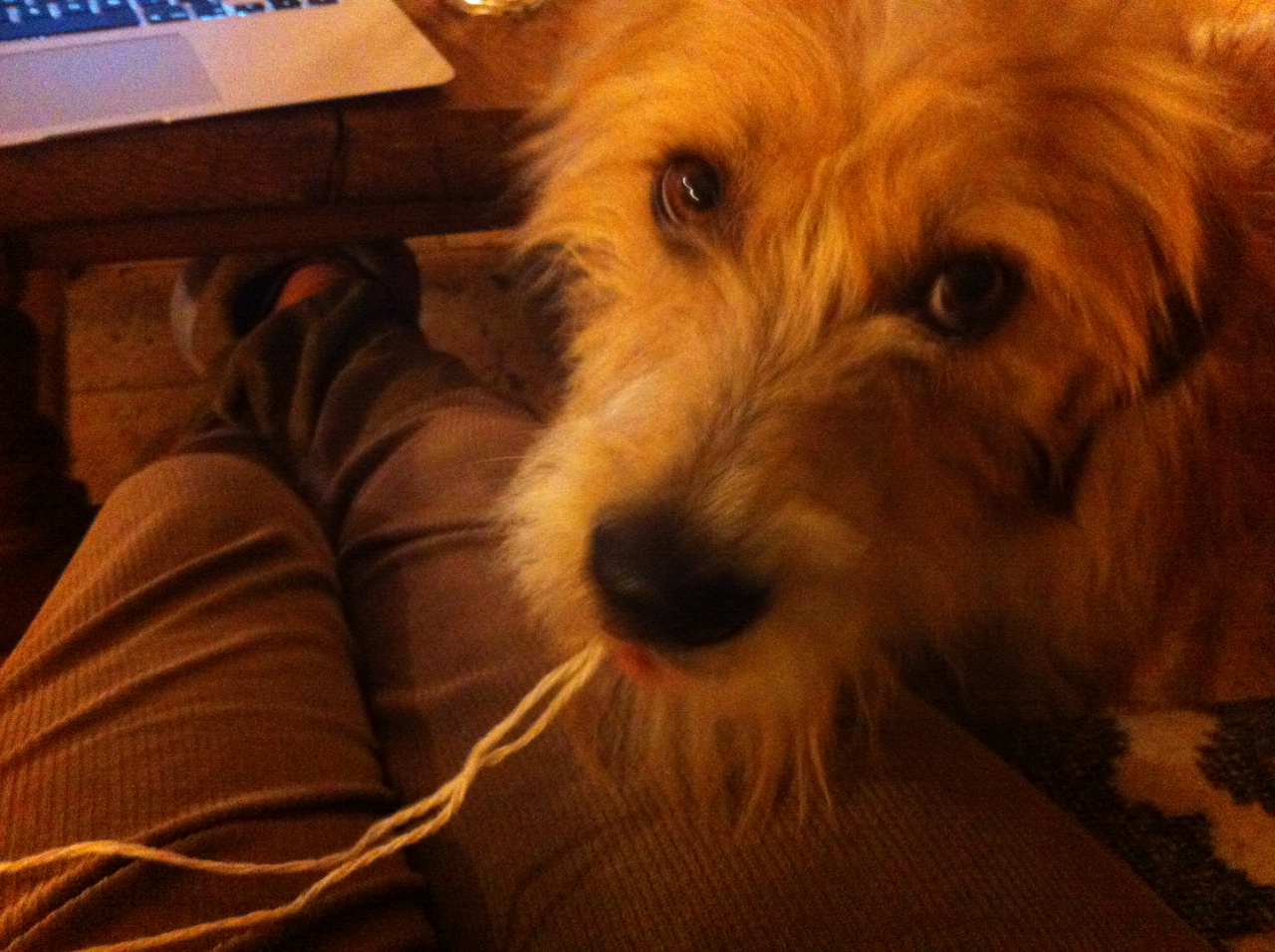
Gari, attempting to eat my wool while I was knitting
Did Rosie realise that it’s safe to play with Cookie? Or was it that fact that she suddenly realised that she’s here to stay because we went away and came back again twice in quick succession? Whatever the reason, ever since we came back from Ireland, there’s been a whole lot of this going on :
It couldn’t be better. Rosie and Cookie, running LoopyLoops around the garden while Cinny attempts to disembowel the Zebra Kong. Cookie taking a break and Rosie standing beside Cinny but not taking the toy from her.
Five months ago, I wrote this in a message to Cork Dog Action Welfare Group :
We need a dog which will play with Cookie but which will take the ‘back off’ messages from Cinny.
Look at that video again and just you try to tell me that’s not what we got!
Have a look at my Art!


Commissions


 Tails From Provence